
Temperature Sensing
Viper — Operation
-
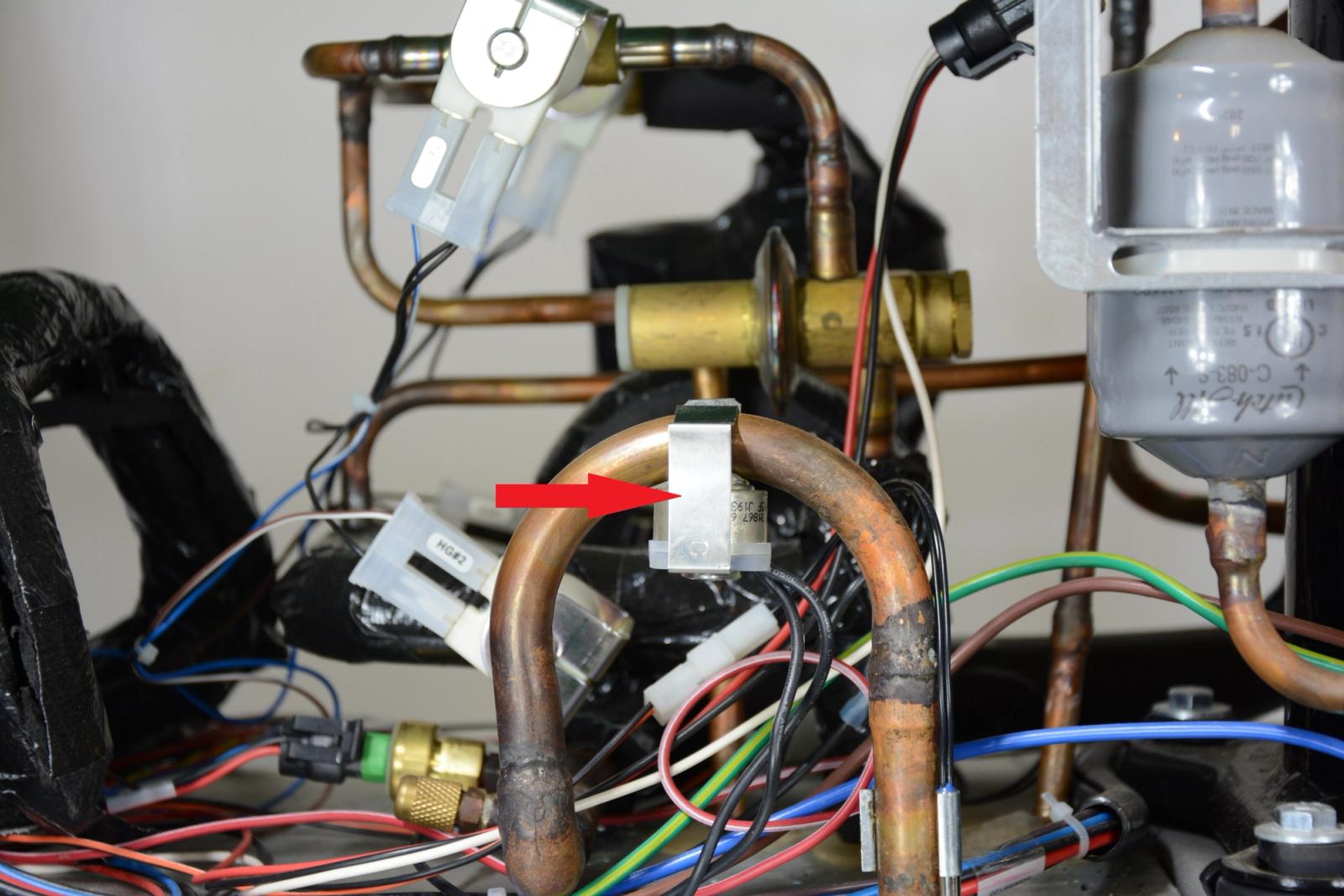
TCO - Thermal Cut out Switch (Barrel)
The thermal cut-out switch (TCO switch) is a third level safety device and is a mechanical switch that is not software controlled. The Viper has one TCO per Barrel that is mounted on the barrel (evaporator) outlet.
The TCO is designed to open its contact if a barrel outlet refrigeration line exceeds 120 degrees Fahrenheit. When the switch temperature drops down to 105F the switch will automatically reset and close the circuit. All the TCO’s in a Viper are wired in series, if anyone opens up with high temperature it breaks the circuit to the I/O board and the Viper shuts down on error (TCO OPEN).
The Viper needs to be power cycled to reset, given all TCO’s again are closed circuits.
-
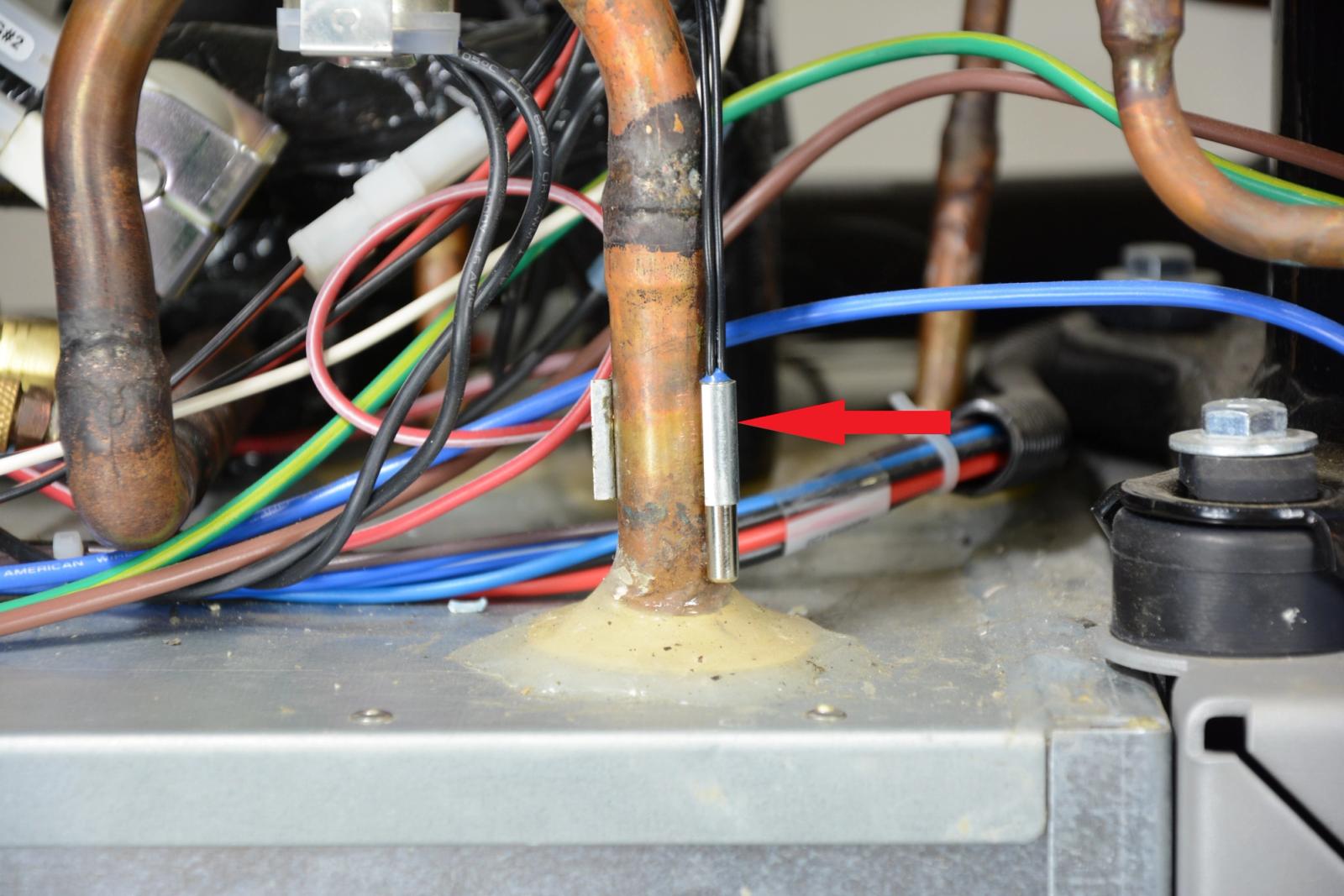
Freeze Barrel Outlet Thermistor
Each barrel has a sensor that is located on the freeze barrels refrigeration outlet line (copper tubing) and mounted with the wires hanging downward for each freeze barrel. This sensor is used to terminate the defrost cycle at 41F and if the sensor temperature reaches 115F for more than 1 minute the Viper will display the error HOT GAS and shut the Viper off.
Thermistor Ohm values
-
TCO – Thermal Cut-out Switch (Compressor)
Exclusive to Vipers running R448a refrigerant is a unique TCO switch (pn 620072408) mounted on the compressor discharge line. This TCO is different than the barrel TCO switches but is wired in series with the barrel TCO’s, so all Viper TCO’s share the same 24VAC circuit.
The compressor TCO opens when the discharge line temperature exceeds 275F (135C) and closes at 240F (115C). If the compressor TCO opens, the entire Viper will shut down on a “TCO Open” error, just like for the barrel TCO’s. The compressor TCO is identified by its copper sensing element, smaller size compared to the barrel TCO, and white dot on top of the sensing element where the wires enter.